
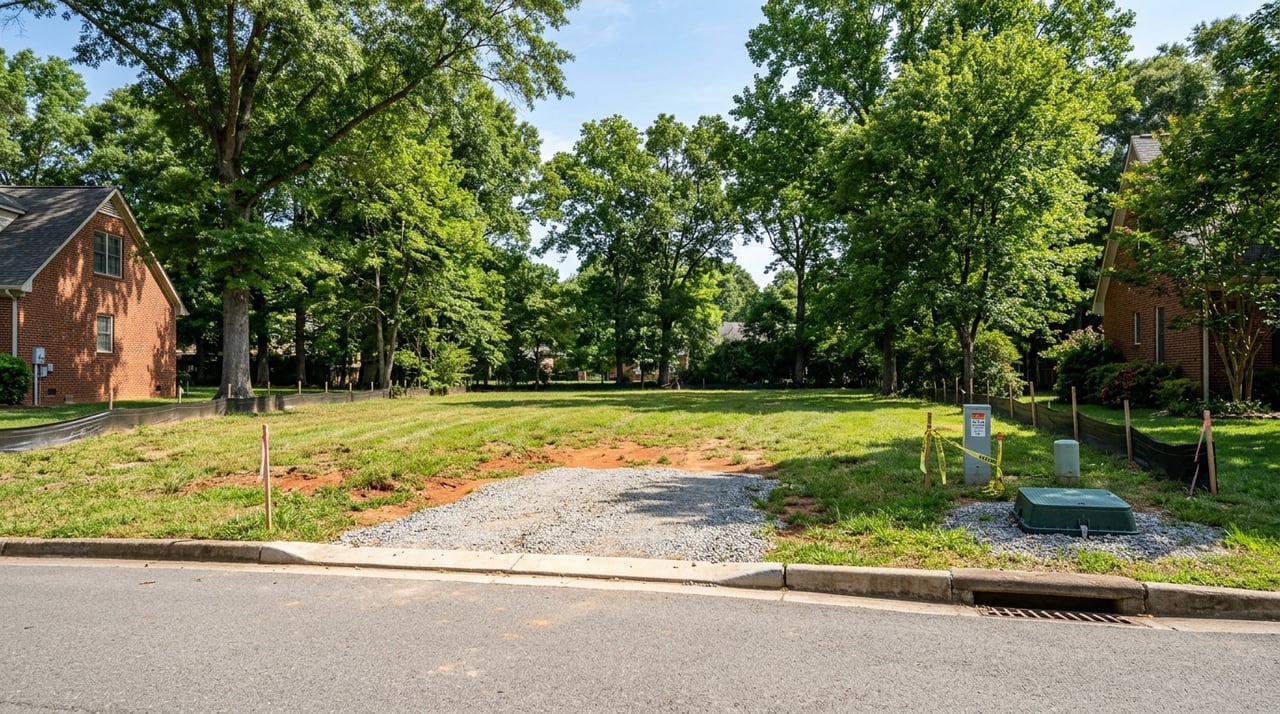
Buying land should feel exciting, not overwhelming. In Holly Springs and greater Marshall County, a great land deal starts with the right calls and a clean checklist. Whether you want a homesite, a small subdivision, or a recreational tract, a few early checks can save you time, money, and stress. This guide gives you local contacts, must-do due diligence, and a simple path from first look to closing. Let’s dive in.
Before you fall in love with a parcel, confirm who has jurisdiction. If the property is in unincorporated Marshall County, the county Zoning, Planning & Building Department is your first stop for zoning, permits, and building code questions. You can find contacts and procedures on the county site at the Marshall County Zoning, Planning & Building Department page. If you have quick questions, save the main number, 662-252-3663. (Marshall County Zoning)
If the parcel sits inside Holly Springs city limits, the Holly Springs Utility Department oversees electric, water, gas, and sewer service. Their service practices explain deposits, field checks, and how utility hookups tie to other approvals like wastewater permits. Review the utility’s rules early so you understand timing and costs. (Holly Springs Utility Department service practices)
For access and driveway questions, the Marshall County Roads & Bridges Department can clarify county road responsibilities, culverts, and driveway permits. Save their page for reference as you plan your entrance and drainage. (Marshall County Roads & Bridges)
Use this checklist before you write an offer. Each item can affect cost, timing, or whether you can build at all.
Find out if the parcel is in the city or unincorporated county. Jurisdiction affects permitted uses, inspections, utilities, and taxes. Call the county zoning office to confirm the zoning designation and ask about the approval path for your intended use. (Marshall County Zoning)
Pull county real property records for the legal description, parcel ID, assessed value, and tax status. Look for recorded plats and prior conveyances. Start with the county site to locate the right portal for public records. (Marshall County homepage)
Ask a title company to review recorded easements, rights-of-way, deed restrictions, and covenants. Large utility or conservation easements can limit where you place a home, road, or septic system.
Verify that the parcel has legal access via a public road or a recorded private easement. If it is a private road, ask who maintains it and whether there is a road maintenance agreement. Coordinate culvert and driveway questions with Roads & Bridges. (Roads & Bridges)
Call the Holly Springs Utility Department to confirm service area, deposits, field survey needs, and any line extension costs for electric, water, gas, or sewer. For rural parcels, permanent power usually requires verification of county permits and wastewater approval, so sequence your steps carefully. (Utility service practices)
In Mississippi, individual on-site wastewater systems are regulated by the Mississippi State Department of Health. Do not assume a lot will perc. Order a professional soils or percolation evaluation, and plan for MSDH approval early since many local permits and power connections depend on it. (MSDH wastewater standards)
If public water is not available, ask a local well driller about expected depth and yield. Use soils guidance and site evaluations to understand groundwater and siting. The MSDH standards document also references soils and siting factors useful at this stage. (MSDH wastewater standards)
Use the FEMA Flood Map Service Center to check the flood zone. Flood zones can affect financing, insurance, and how much of the parcel is buildable. If any part of the property is in a special flood hazard area, factor that into your site plan. (FEMA Flood Map Service Center)
Review the National Wetlands Inventory as an early screen. If mapped wetlands appear on or near the site, consider a professional delineation and a pre-application conversation about federal permits. Wetlands can change timelines and costs. (USFWS wetlands inventory overview)
Check soils for shrink-swell, seasonal water tables, and bearing capacity, and review topographic maps for slopes that affect foundation and driveway costs. A boundary and topographic survey will help you plan realistic grading and drainage. (MSDH wastewater standards)
Ask your title company to search for timber reservations, mineral rights, hunting leases, and conservation easements. These can affect how you use or value the property.
If you plan a manufactured home, ask the county zoning office about placement rules and age requirements. Coordinate early with MSDH for wastewater approvals. (Marshall County Zoning)
Marshall County issues building permits and enforces the 2018 International Building Code for county projects. Permits have activity windows, so confirm current expiration rules and required inspections. A quick pre-application call with zoning can shorten your path. (Marshall County Zoning)
Holly Springs Utilities outlines deposits, field checks, temporary service, and permanent connections. For rural connections, expect verification of county permits and MSDH wastewater approval before permanent power is turned on. Ask the utility about any per-pole or line extension charges so you can budget accurately. (Utility service practices)
MSDH sets design standards, minimum setbacks from wells and water bodies, and sizing rules that start around 150 gallons per bedroom. Engage MSDH or a qualified designer early to avoid redesigns. If a lot has no existing permit, make your offer contingent on septic approval. (MSDH wastewater standards)
If the National Wetlands Inventory suggests wetlands, a professional delineation and a discussion about potential Section 404 permitting can clarify impacts before you commit to a site plan. Build this time into your schedule. (USFWS wetlands inventory overview)
Land prices in and around Holly Springs vary widely. Smaller, buildable acreage near town and major roads often commands a higher price per acre, especially when public water or sewer is available. Larger timber or recreational tracts usually sell for a lower per-acre figure but a higher overall price. Topography, floodplains, wetlands, and the cost to bring in utilities are major drivers of value.
Use active listings only as a starting point. For true comparables, review recent closed sales in county records or through a local market analysis. The most reliable pricing comes from properties with similar size, access, utility status, and site constraints.
Focus on a clear building area, septic approval or sewer access, and realistic utility hookup costs. Walk the site to locate a driveway path and home pad, then order a soils test. Call Holly Springs Utilities for written estimates and timing so you can sequence permits and power. (Utility service practices)
Ask the county about zoning, minimum lot sizes, setbacks, and subdivision rules. Clarify whether on-site septic is acceptable for multiple lots or if centralized sewer is required. Start pre-application meetings early to understand road, drainage, and bonding expectations. (Marshall County Zoning)
Evaluate timber, hunting potential, and any conservation or mineral encumbrances. Confirm taxes and access. A forester and a title company can help you understand long-term value and any use limitations.
Pre-offer: Screen public records for parcel ID, plats, and tax status. Call zoning to confirm permitted uses, contact the utility to confirm serviceability, and check FEMA and wetlands sources. Walk away if there is no legal access or if wetlands cover buildable areas. (Zoning) (FEMA) (USFWS wetlands overview)
Offer: Include contingencies for survey, title review, septic approval, and financing. For homesites, add a soil or perc contingency.
Under contract: Order a boundary and topographic survey, soils testing, and an MSDH site evaluation. Request a written utility extension or hookup quote and schedule. If wetlands are possible, order a delineation. (MSDH wastewater standards) (Utility practices)
Prior to closing: Resolve easements, define driveway and culvert responsibilities, and verify tax prorations.
Post-closing: Pull building permits, schedule inspections, finalize MSDH septic permits, and complete utility hookups per the utility’s steps. (Zoning) (Utility practices)
Watch for lack of legal access, poor soils with no MSDH approval path, jurisdictional wetlands in key areas, large utility easements that cut into the building envelope, vendor or tax liens, and private road upgrades at your expense. At minimum, plan to hire a licensed surveyor, a title company, an MSDH-qualified septic designer, and a civil or site engineer if grading and drainage are complex. Verify contractor licenses with the Mississippi State Board of Contractors. (MSBOC license verification)
You do not have to navigate this alone. If you want a practical, step-by-step process backed by local relationships, let us help you map the approvals, sequence utilities, and price the work before you commit. Schedule your consultation with Dawn Welch Kinard to move forward with clarity and confidence.
Stay up to date on the latest real estate trends.
We are here to help you with all your real estate needs, whether it is just a question or help to sell/find a home, feel free to contact us at any time!

WELCH REALTY, LLC
MOBILE: (901) 490-9003
OFFICE: (901) 221-8032
[email protected]
356 NEW BYHALIA RD STE 2 COLLIERVILLE, TN 38017