
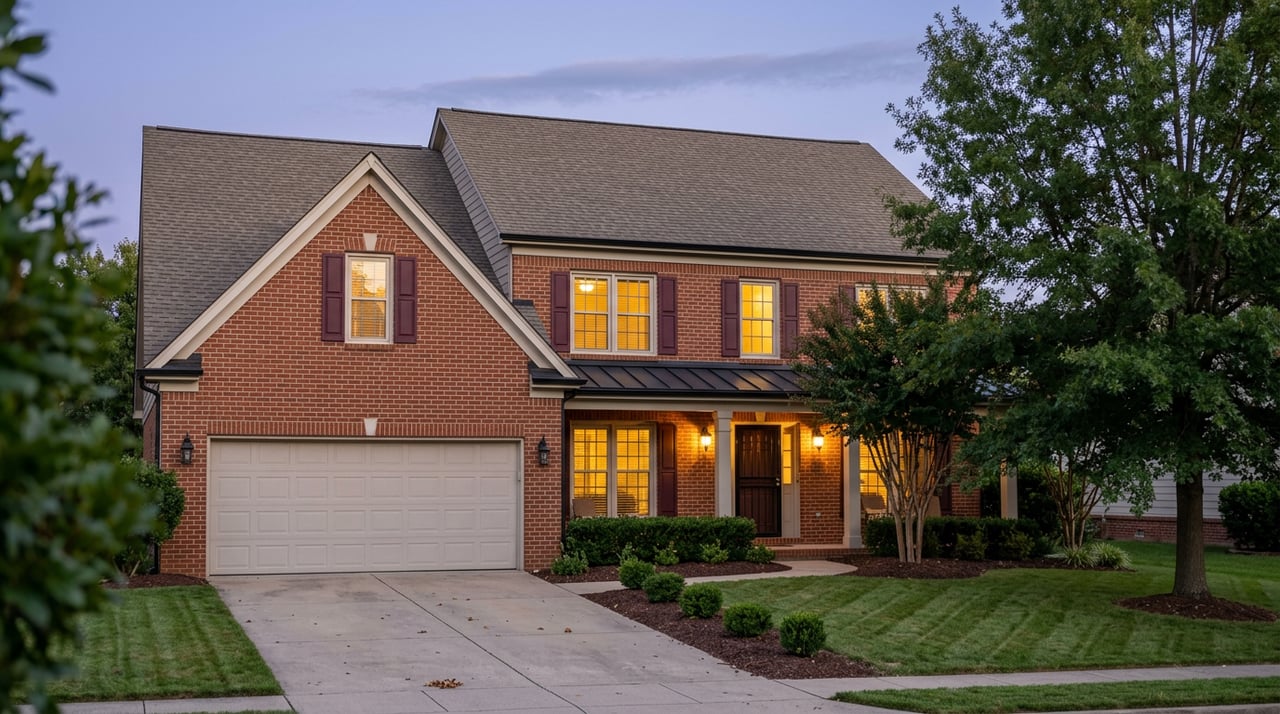
You closed on a lot in Halle Plantation. You picked a pool contractor, sketched the fence line, and walked into the Town of Collierville's Building and Codes office to pull a permit. The clerk takes your application, checks the zoning, and hands you paperwork that says you're cleared to dig.
According to the Town, you are.
According to your homeowners association, you haven't started the process at all.
That gap between "the Town says go" and "the HOA says wait" is the single biggest surprise for new owners in Collierville's master-planned subdivisions, and it's built into the paperwork on purpose. Halle Plantation's own Architectural Control Guidelines spell out the sequence explicitly: final working drawings submitted for a building permit have to be reviewed and preliminarily approved by the Architectural Review Committee before you ever apply to the Town. The stated reason is to keep homeowners from pulling a city permit for a project the ARC hasn't cleared yet. In practice, plenty of buyers do it backward anyway, because nothing at the Town's counter stops them.
The Town's permit process runs on a schedule. Codes review is a known quantity: submit your plans, pay the fee, get a decision. Tennessee even lets a homeowner pull an owner-builder permit once every two years without hiring a licensed general contractor, a detail spelled out on the Town's own residential permitting page. That's a Town rule with a clear boundary.
The ARC is a different animal, and this is the part that catches people off guard. According to HOA Weekly, Tennessee sets no statutory deadline for an architectural committee to decide anything. There's no deemed-approval rule that says silence after 30 or 60 days counts as a yes. There's no required written-denial timeline. Every part of the process, including how long you wait, comes from whatever the association's own governing documents say.
Tennessee courts will step in if a committee acts in bad faith or applies its own rules unreasonably, but that's a legal remedy, not a scheduling tool. It means a homeowner whose contractor is ready to break ground on a Tuesday has no statutory hook to force a decision by Friday. The Town's clock keeps ticking. The ARC's clock may not exist.
The rejections aren't random. Halle Plantation's guidelines are specific enough that most delays trace back to a handful of recurring items:
None of these are unusual for a golf-course community built around shared sightlines and a consistent look. But a buyer who assumes a pool fence is a pool fence, or that a repaint is a private decision, is the buyer most likely to submit plans that bounce back for revision, adding weeks to a project that has no deadline attached to begin with.
Here's the detail that changes how a buyer should shop, not just how they should renovate after closing. Collierville doesn't have one uniform layer of design control sitting on top of the Town's zoning code. Many of the town's master-planned subdivisions, Halle Plantation among them, run their own architectural review. A lot of the town's older single-family neighborhoods have no HOA at all, which means no ARC, no design guidelines beyond whatever the Town itself requires, and no private committee standing between a homeowner and a paint sprayer.
Where an HOA does exist, the dues attached to it vary by a wide margin. Recent listing snapshots in Collierville have shown annual dues as low as $140 and as high as $2,150, with at least one community billing $58 a month instead of a yearly lump sum. That spread isn't just about landscaping budgets. A subdivision with a golf course, two clubhouses, tennis and pickleball courts, and a lifeguarded pool, the kind of amenity package Halle Plantation advertises, needs a larger operating budget and a more detailed rulebook to protect the value of those shared assets. The higher the dues, generally, the more design control comes attached to them.
That's the trade a buyer is actually making when they choose a subdivision with amenities over one without. It isn't just a monthly cost. It's a private review process layered on top of the Town's own, with its own document, its own committee, and its own timeline that the Town has no authority to speed up.
If a Collierville property comes with an HOA, the paperwork worth reading isn't the CC&Rs summary a listing agent hands over in passing. It's the architectural guidelines themselves, and specifically the section on submission sequencing. Halle Plantation's process runs in two stages, a preliminary review meant to catch obvious conflicts early, followed by a final submission that responds to the committee's comments before construction drawings go anywhere near the Town's building department.
A practical order of operations looks like this:
None of this requires an attorney or a formal appeal. It requires knowing, before the closing table, that two separate approvals exist and that only one of them runs on a schedule you can plan around.
Does the Town's Design Review Commission apply inside a private HOA like Halle Plantation? Generally no. The Town's Design Review Commission and Historic District Commission support specific overlay areas, most notably around the historic Town Square, not private subdivisions governed by their own recorded covenants. Inside an HOA, the architectural review authority sits with the association's own committee, working from its own recorded guidelines.
Can an ARC reject a project indefinitely? Tennessee courts won't disturb a committee's decision unless it acted unreasonably or in bad faith. That's a check against abuse, not a deadline. A slow but good-faith review process has no statutory expiration date, which is exactly why building in extra time matters more than any other single piece of planning advice here.
If you're weighing a Collierville subdivision with amenities and design rules against one without, or you're already under contract and want to know exactly what a specific HOA's architectural process will require before you close, that's a conversation worth having early. Welch Realty, LLC works these transactions across Collierville and the wider Mid-South every week and can help you read the governing documents before they become a surprise. Schedule Your Local Market Consultation and we'll walk through what your specific neighborhood actually requires.
This article is general information, not legal, tax or financial advice. Consult a qualified professional about your situation.
Stay up to date on the latest real estate trends.
We are here to help you with all your real estate needs, whether it is just a question or help to sell/find a home, feel free to contact us at any time!
WELCH REALTY, LLC
MOBILE: (901) 490-9003
OFFICE: (901) 221-8032
[email protected]
356 NEW BYHALIA RD STE 2 COLLIERVILLE, TN 38017