
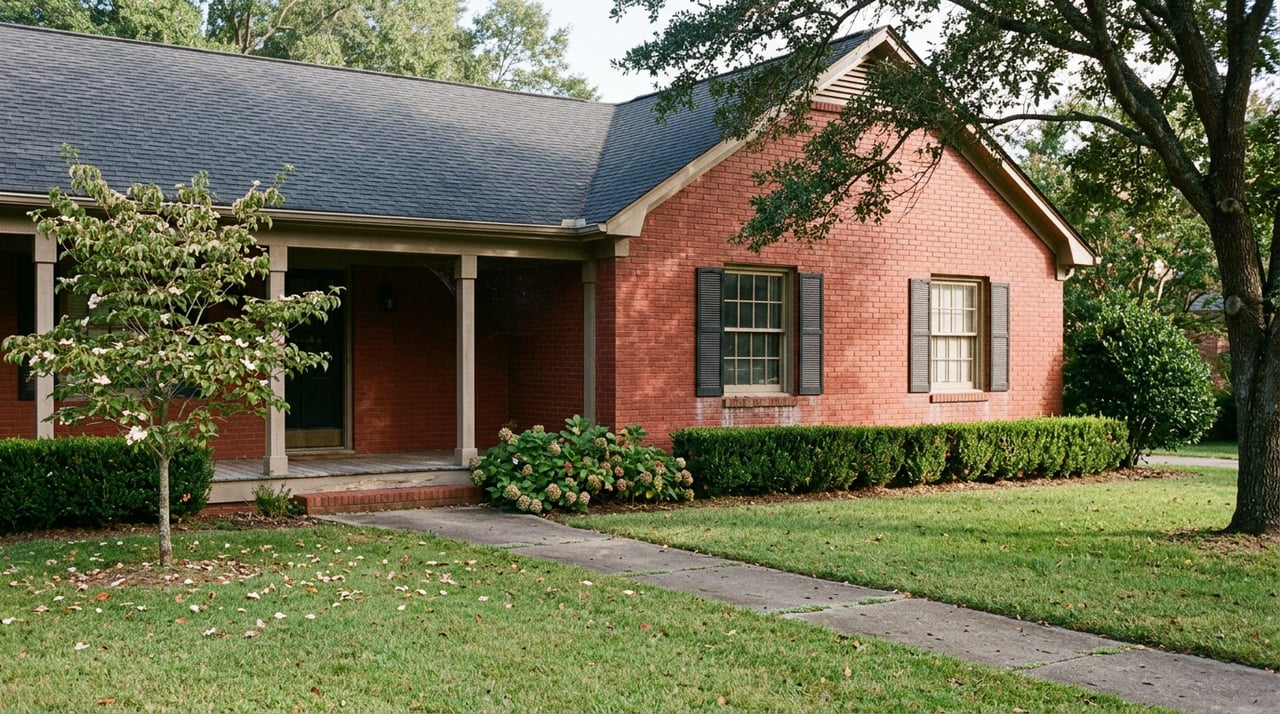
Ask anyone buying a house inside Holly Springs' historic district what they're worried about, and they'll usually mention the same thing: the paperwork. Will the city let them paint the shutters that shade of blue? Can they put up a privacy fence? What happens if they want to add a carport to a house that's been photographed for every Pilgrimage tour the town has run?
That worry is understandable, and the commission review is only one part of the process. The Historic Preservation Commission that reviews those requests has no authority over anything a buyer can't see from the street. Wiring concerns behind the plaster may surface during insurance or lending review, sometimes after a buyer is already under contract.
Holly Springs is one of the Mississippi cities holding Certified Local Government status through the Mississippi Department of Archives and History, which means the city runs its own historic preservation commission under state guidelines rather than leaving oversight entirely to the state. Under Mississippi Code Section 39-13-5, that commission issues what's called a Certificate of Appropriateness before an owner can make exterior changes to a property inside a designated historic district. Paint, fencing, additions, new porches: all of it goes through the commission first.
Here's the part most buyers never look up. The statute is explicit that the commission "shall not consider interior arrangements of buildings and structures." Floor plans, finishes, and what you do to the inside of the house are outside its jurisdiction entirely. The commission also cannot deny a Certificate of Appropriateness for demolition if refusing it would cause "unreasonable economic hardship" to the owner, a protection built into state law for exactly the situation where a structure has genuinely deteriorated beyond reasonable repair.
So the visible bureaucracy, the one with meetings and applications and a city form to fill out, only governs what the house looks like from the sidewalk. It has nothing to say about what's running through the walls.
Holly Springs carries a housing stock that spans well over a century, with antebellum architecture that a local roofing contractor working in the city describes as among the finest examples in the state, homes built well before the National Electrical Code existed in anything like its current form. A house built before 1950, which describes a meaningful share of what's inside the historic district, has a real chance of still carrying some of its original knob-and-tube wiring, an ungrounded two-wire system that was standard practice from roughly the 1880s through the 1940s.
The problem is that most insurance carriers and mortgage lenders won't accept it, and that rejection tends to surface at the worst possible moment: after an offer is accepted, when a lender orders an inspection and the underwriter comes back asking questions nobody raised during showings. A buyer who assumed the biggest hurdle would be a city meeting about fence height can suddenly be negotiating a rewire instead.
The numbers involved are specific enough to plan around, and current as of mid-2026. A wiring-focused electrical inspection, distinct from a general home inspection, typically runs $200 to $500 and takes two to four hours because the electrician needs access to the attic, basement, and wall cavities where the original runs live. A full rewire of a standard-sized older home typically falls between $8,000 and $20,000 or more, depending on the home's size and how difficult the wiring is to reach. None of that is quick. Full rewiring is disruptive enough that many homeowners choose to be out of the house for part of it, and insurers generally want documentation, not a verbal assurance, before they'll write a standard policy: a certificate of completion from the electrician, the permit, and the final municipal inspection.
There's a reason roofs get caught earlier than wiring. A roof is visible. Ultimate Roofing, a contractor that works on homes throughout Holly Springs and the rest of Marshall County, notes that many of the city's historic properties carry roofs that are decades old and have absorbed multiple layers of prior repair. As of mid-2026, a standard asphalt shingle replacement on a typical Holly Springs home runs $8,000 to $16,000, with historic properties sometimes running higher because of the care required during tear-off and the need to match materials appropriate to the structure's age. A buyer or a home inspector can look up at a roofline and get a reasonable sense of what they're dealing with.
Wiring offers no equivalent tell. It sits inside the walls, behind lath and plaster that were never designed to be opened casually, and the only way to know its true condition is to hire someone qualified to look. That asymmetry is the whole reason the commission paperwork gets the attention and the wiring doesn't: one problem announces itself, and the other waits for an underwriter to ask.
For anyone buying or preparing to sell inside Holly Springs' historic district, the sequence that avoids a late surprise looks like this:
The commission process is the more visible one: an application, a meeting date, a decision that gets recorded. The wiring problem is quieter. It doesn't require a hearing. It may show up in an underwriter's file or a lender's stipulation letter after the buyer has already spent weeks focused on paint chips and fence pickets. Holly Springs draws people every April for the Pilgrimage tours through homes like those near Walter Place Estates & Gardens, and that same appeal is what eventually puts buyers in a position to own one. The house that looks finished on a house tour and the house that's ready to insure are not always the same house, and wiring can be part of that gap.
Does the Historic Preservation Commission review paint colors and fence types? Yes. Exterior appearance, including paint, fencing, additions, and other changes visible from the street, is exactly what the Certificate of Appropriateness process exists to review.
Can I get standard homeowners insurance on a Holly Springs home with knob-and-tube wiring? Often not through a standard carrier until the wiring is inspected and either replaced or documented as safe by a licensed electrician. Some specialty carriers will consider it under specific conditions, but that route typically comes with higher premiums and is worth exploring only through an agent who works with older-home coverage.
What if I want to demolish a historic structure that's beyond repair? State law prevents a commission from denying a demolition Certificate of Appropriateness if refusing it would cause unreasonable economic hardship, but that determination requires documentation, not just an owner's assessment of the property's condition.
Does a new roof need Commission approval? Exterior review generally extends to anything visible from the street, which can include roofing material and color, so it's worth checking with the commission before contracting any exterior work rather than after.
If you're weighing a purchase inside Holly Springs' historic district, or getting a historic property ready to list, the sequence above is exactly the kind of groundwork Welch Realty, LLC walks clients through before an offer ever goes in. Schedule Your Local Market Consultation and let's map out what your specific property needs before it becomes a surprise at closing.
This article is general information, not legal, tax or financial advice. Consult a qualified professional about your situation.
Stay up to date on the latest real estate trends.
We are here to help you with all your real estate needs, whether it is just a question or help to sell/find a home, feel free to contact us at any time!

WELCH REALTY, LLC
MOBILE: (901) 490-9003
OFFICE: (901) 221-8032
[email protected]
356 NEW BYHALIA RD STE 2 COLLIERVILLE, TN 38017